
Where does government money go?
See the spending. Check the sources.
Explore federal, state and city spending by public service. Open a spending category to see its source items, compare available years and check the official records. Free to read, with no account required.

One dataset. A viewfor every reader.
Residents, researchers and analysts each get the view built for the questions they ask — from a single city line item to a fifty-state comparison.


Track how government money is spent
Follow your taxes from the federal budget down to your city's line items.
Explore budgets, agencies, and public spending
Compare agencies and fiscal years, then cite the filing behind every figure.
Compare fiscal data across states, cities, and years
Put one jurisdiction next to comparable ones on a single normalised schema.
Four ways intothe same budget.
Open any government on ImpactLine and the same set of tools is waiting, whether it is a federal department or a city of forty thousand.
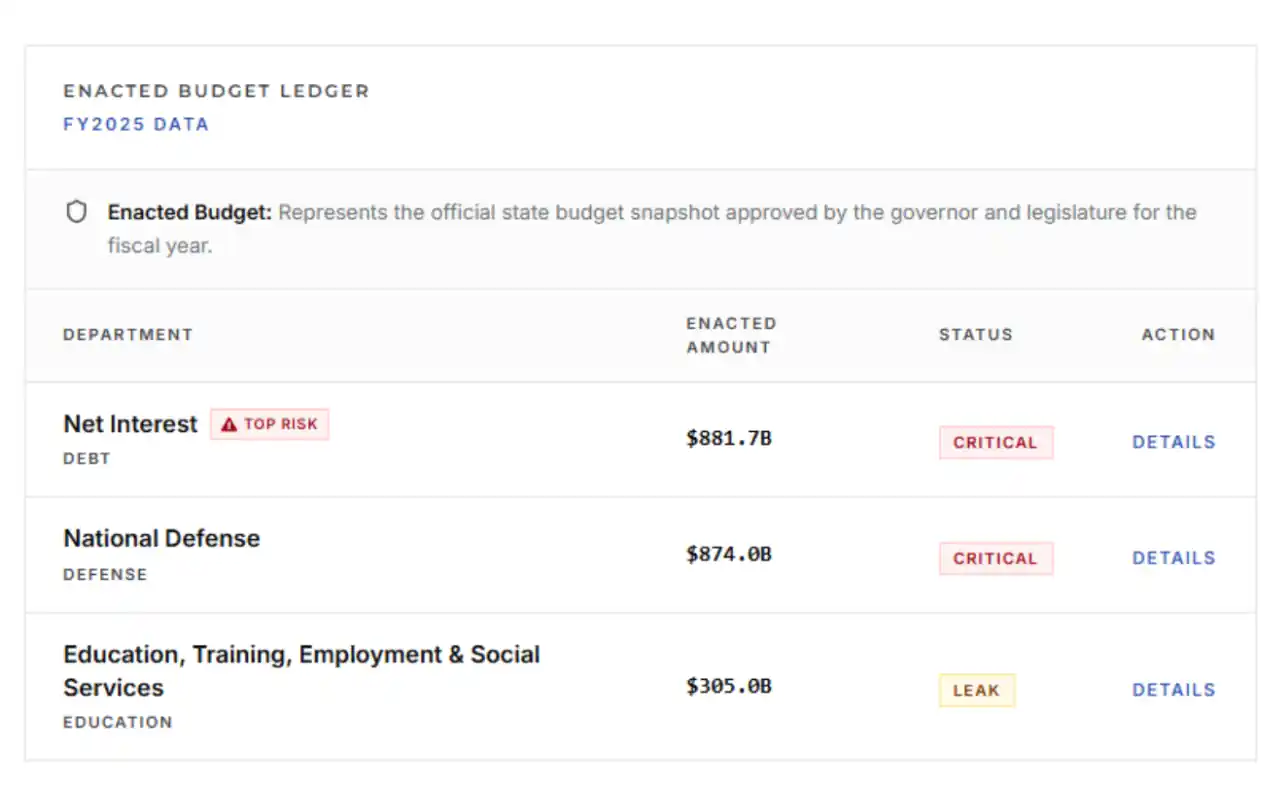
Open the spending behind the total
Individual source items
Open the published items behind a spending category. Detail varies by source and government.
Understand the service
See what the category pays for, then inspect the source items available within it.
Always dated
Every figure shows the fiscal year it belongs to and the filing it was published in.
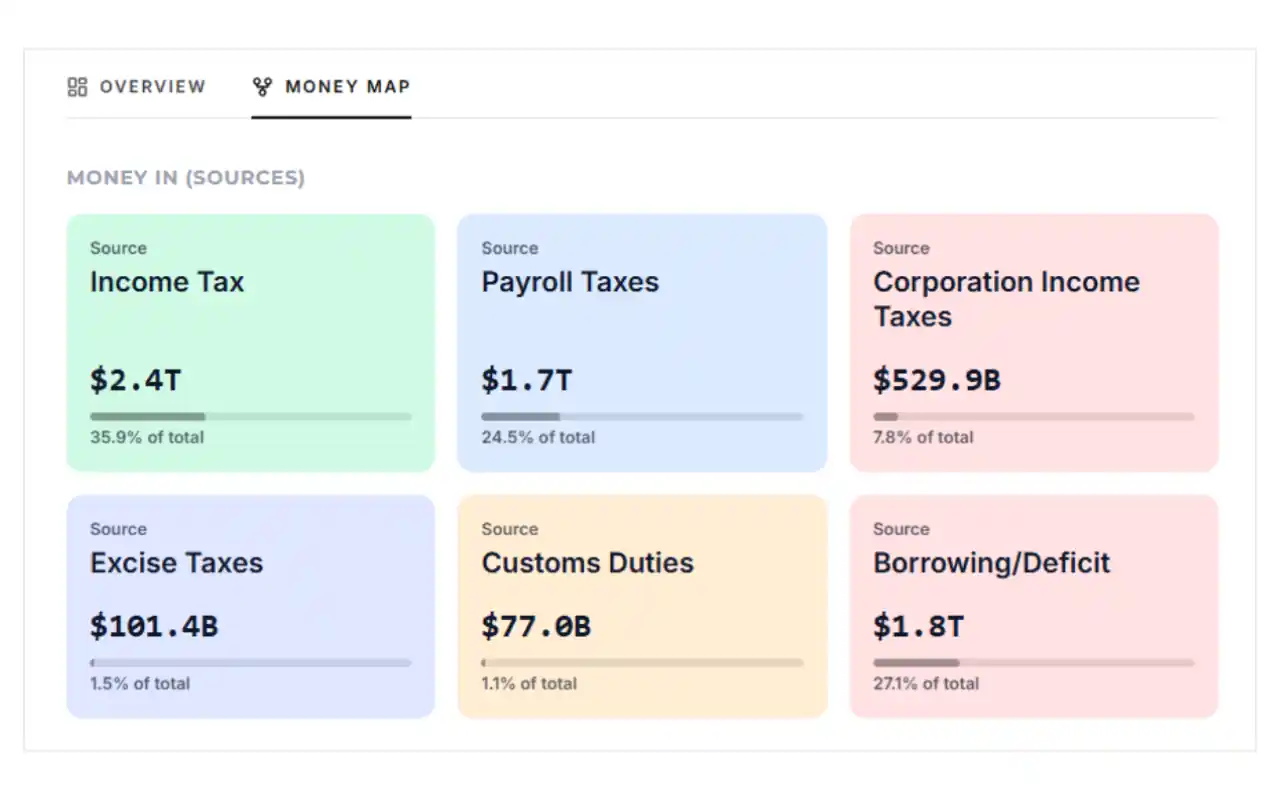
Compare revenue, spending and funding
Start at the source
Explore reported taxes and other revenue alongside spending categories.
Keep the measures separate
Revenue, budget authority, awards and actual spending answer different questions. Each keeps its source and period.
Check the evidence
Open linked source records. A money map does not prove that a particular tax funded a particular payment.
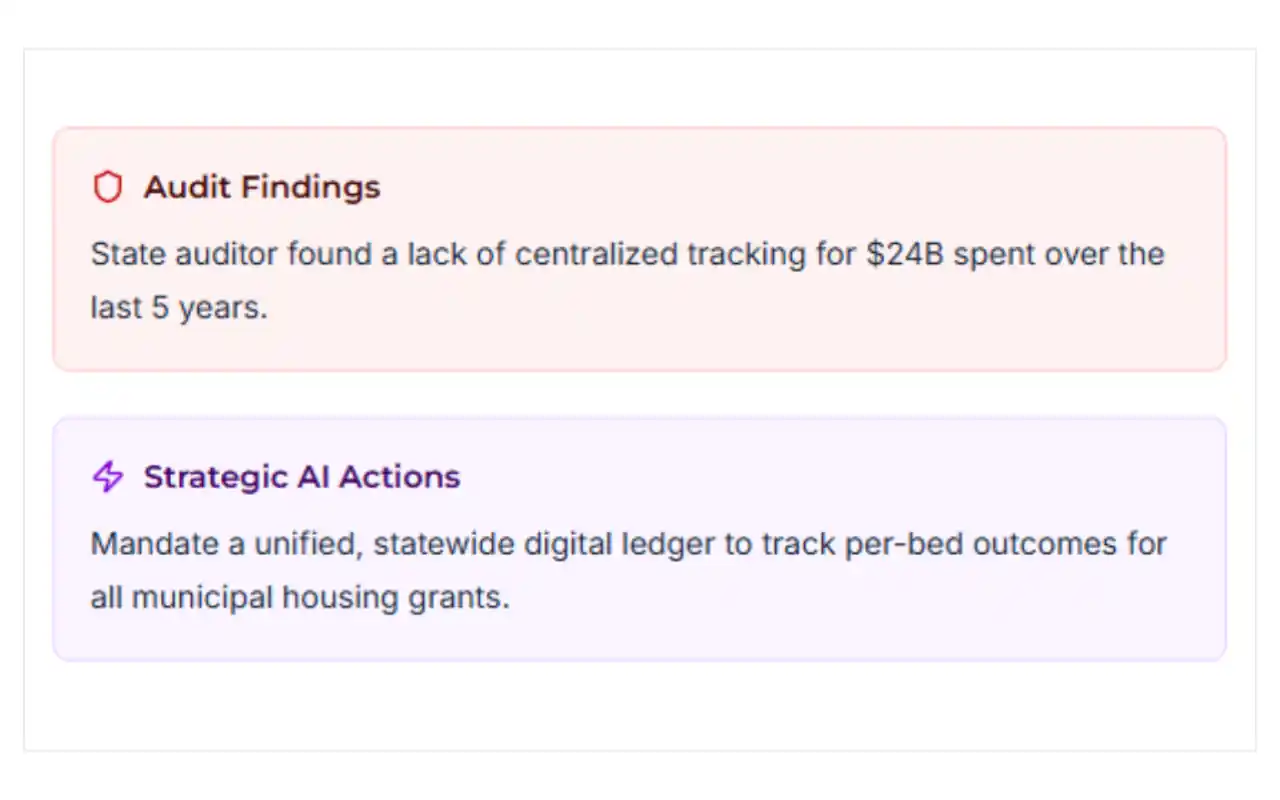
Understand the spending question and possible fix
Read the issue in context
See the spending question, linked findings where available, and the limits of the evidence.
Look for better public services
Review concrete government changes, protections for people and a result to measure.
Distinguish questions from findings
Spending amounts and review questions are not official audit findings or proof of fraud.
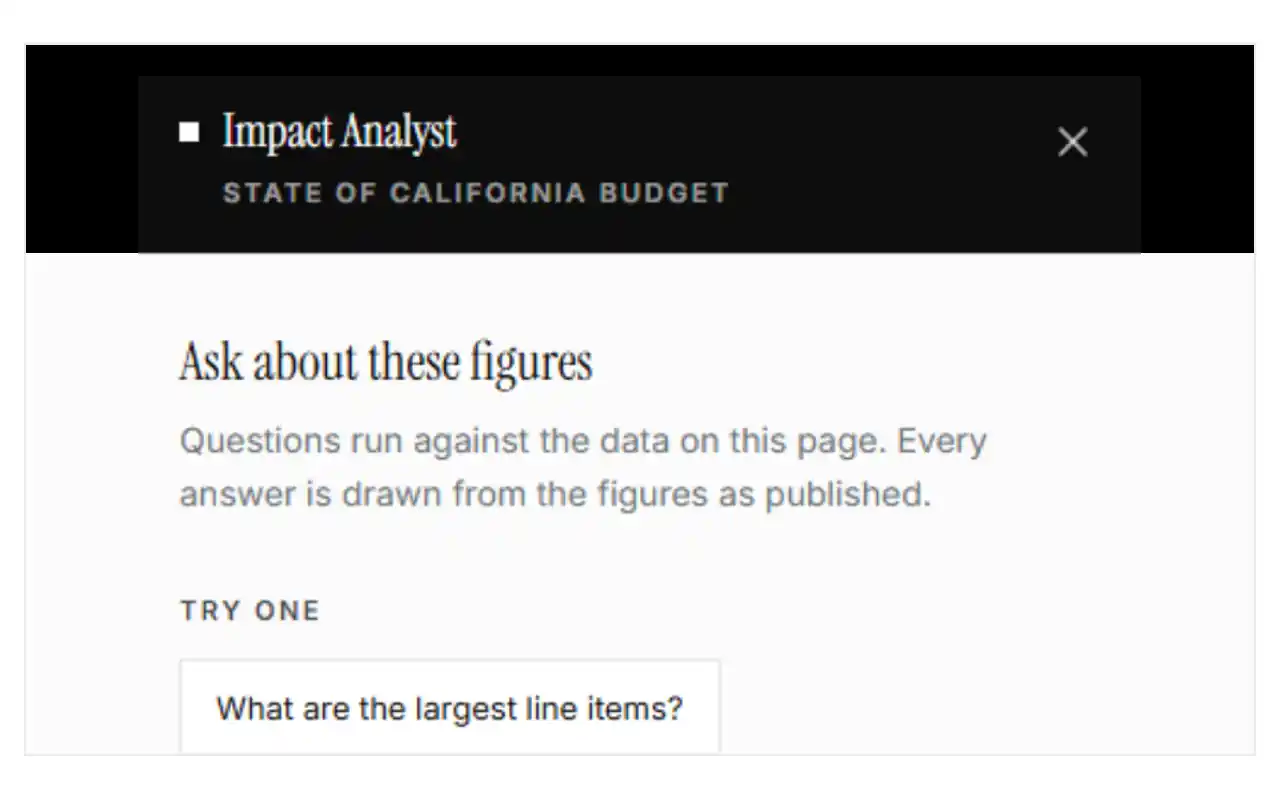
Ask a question in plain English
No filters to learn
Type the question the way you would say it out loud.
Answers show their source
Every answer lists the budget rows it was drawn from, so you can check it.
Stays on your page
Questions run against the government and fiscal year you are already reading.
Federal, all 50 states,and your local government.
Explore reported state spending and search the full city, town and township directory. The cities below are starting points, not the full catalog. Each page identifies its available source years and reporting limits; selected states also show separate enacted budgets.
- Federal1 jurisdiction
- States50 jurisdictions
- California
- Texas
- New York
- Florida
- Minnesota
- Rhode Island
- Alabama
- Alaska
- Arizona
- Arkansas
- Colorado
- Connecticut
- Delaware
- Georgia
- Hawaii
- Idaho
- Illinois
- Indiana
- Iowa
- Kansas
- Kentucky
- Louisiana
- Maine
- Maryland
- Massachusetts
- Michigan
- Mississippi
- Missouri
- Montana
- Nebraska
- Nevada
- New Hampshire
- New Jersey
- New Mexico
- North Carolina
- North Dakota
- Ohio
- Oklahoma
- Oregon
- Pennsylvania
- South Carolina
- South Dakota
- Tennessee
- Utah
- Vermont
- Virginia
- Washington
- West Virginia
- Wisconsin
- Wyoming
- CitiesFeatured starting points
From a headline numberto the filing behind it.
The same three moves work on every government on the site — a city department reads the same way as a federal agency.
- 01
Pick a government
Start with the federal budget, or go straight to your state or city. Every jurisdiction opens on the same overview, so you never have to learn a new layout.
- 02
Open the budget
Revenue, appropriations and agency-level detail, broken down so you can see what sits underneath each total instead of stopping at the headline figure.
- 03
Follow it to the source
Each view shows the fiscal year it covers and points back to the published record behind it, so you can read the original for yourself.
Before you dig in,the common questions.
Short answers on what ImpactLine costs, where the figures come from and which governments are covered.
Yes. Reading budgets on ImpactLine costs nothing and doesn't require an account.
From each government's own published filings and data services. Every view shows the fiscal year it covers and links back to the record it was drawn from, so you can read the original yourself.
Missing source values are never filled with mock spending. Published source estimates keep their original flags. Accountability calculators separately label assumptions and scenarios; these are not verified savings or government accounts.
It depends on the government. Some publish continuously, others once a budget cycle. Each page states the fiscal year the figures belong to, so you always know which year you're reading.
All 50 states have Census spending records, comparisons and downloads. Search the city directory for municipal and town/township records; New York City, Los Angeles, Chicago and San Francisco are featured starting points. Each page identifies its available years, source flags and reporting limits. Selected states also have separately dated enacted budgets.
No. ImpactLine is independent and not affiliated with any government or agency. It reads public records that governments publish and presents them in one place.
It's your money. Go and look at it.
Start with the federal budget, then narrow to your state and city —the same breakdown, the same sources, all the way down.